
The Cascais City Council has officially contacted the Spanish company to learn about its innovative system of anti-algae barriers and amphibious dredgers, while Nautilus holds discussions with various Portuguese agencies interested in its solutions for protecting the Algarve coastline and other affected areas.
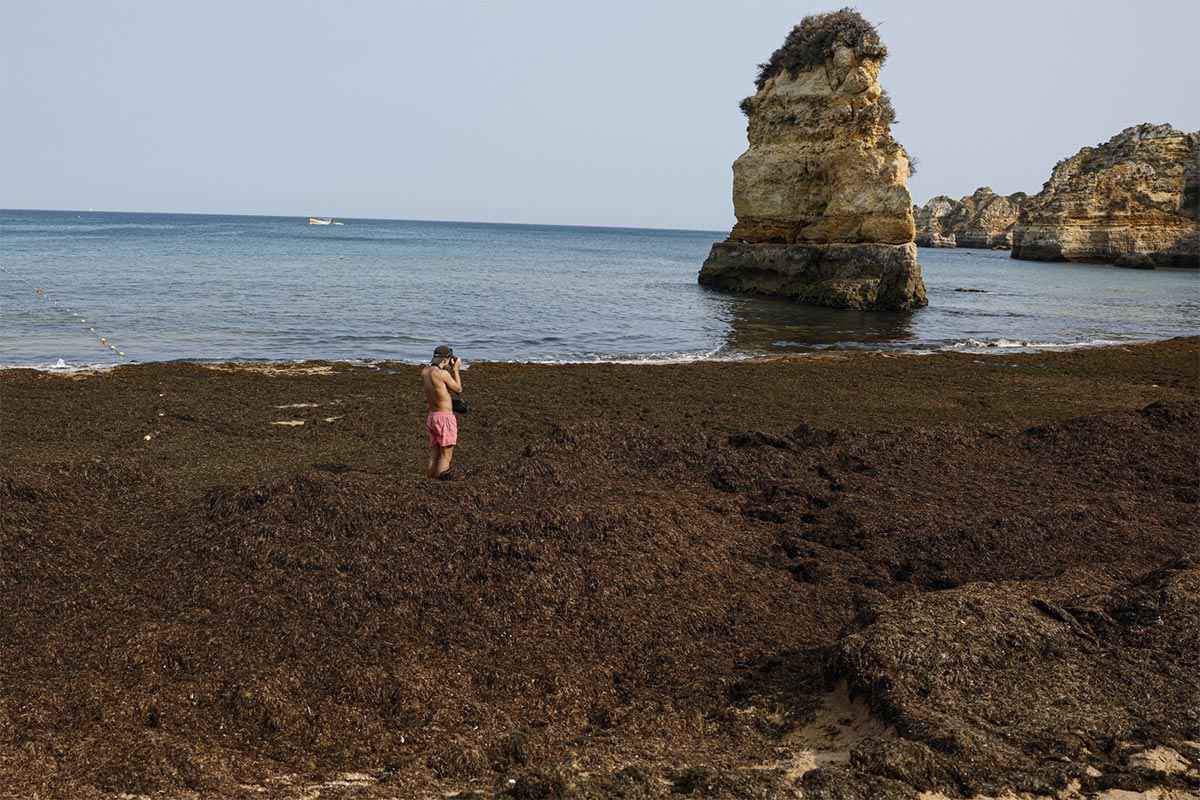
The invasion of Asian algae, a serious problem for the Portuguese coast.
The proliferation of invasive Asian algae has become one of the major environmental challenges facing the coasts of Portugal and Spain. The spread of the species Rugulopteryx okamurae, native to the Pacific, is causing significant disruptions to marine ecosystems and leading to serious consequences for tourism, fishing, and coastal economic activities.
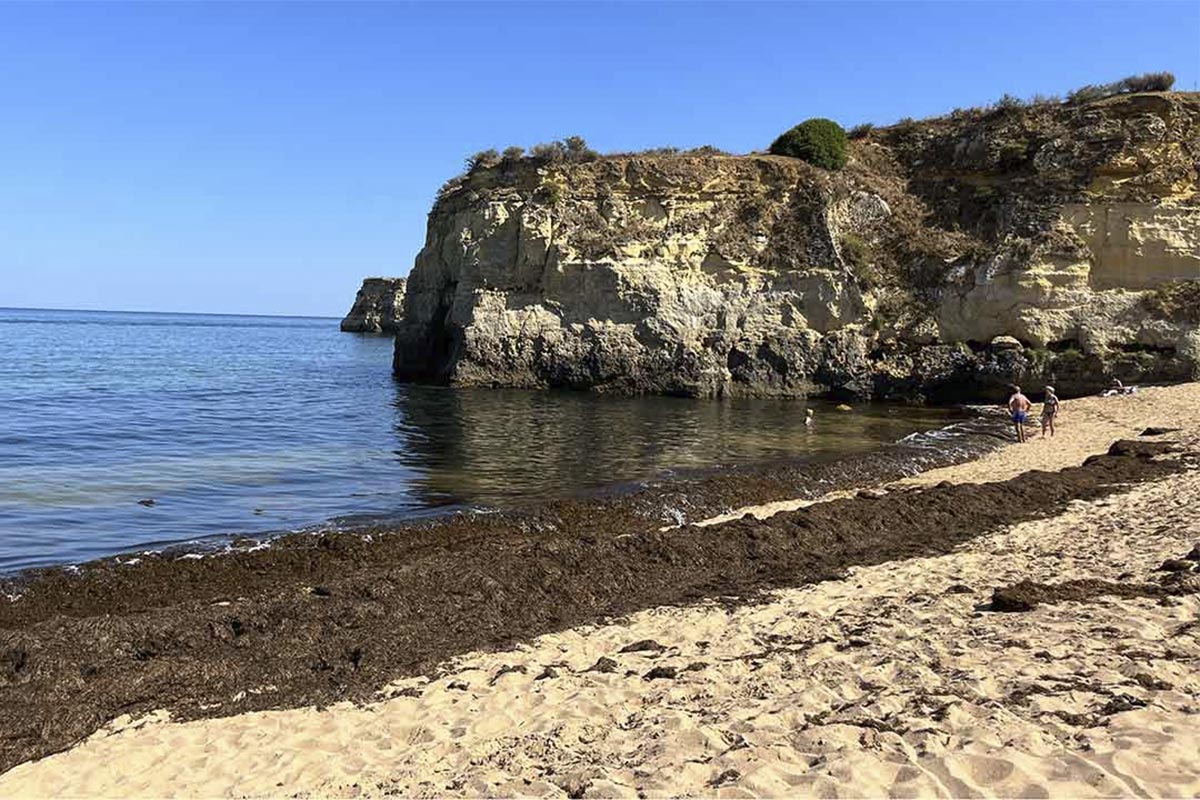
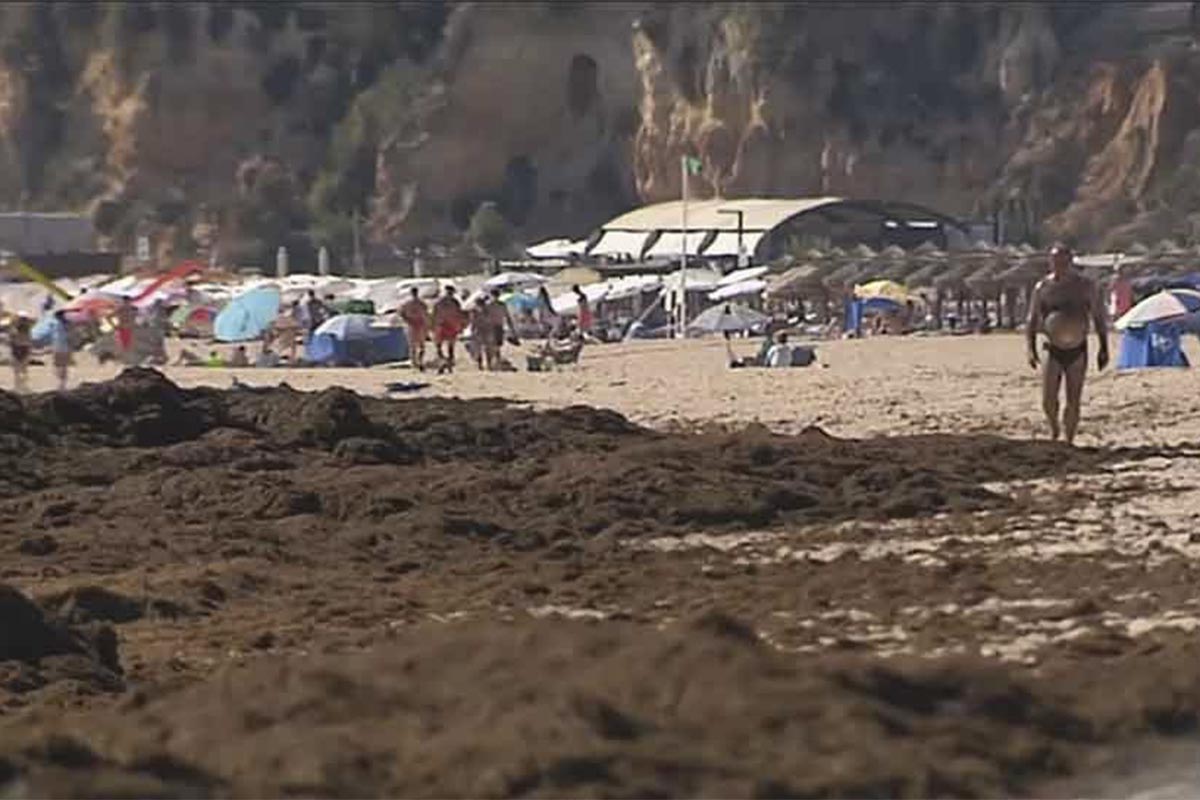
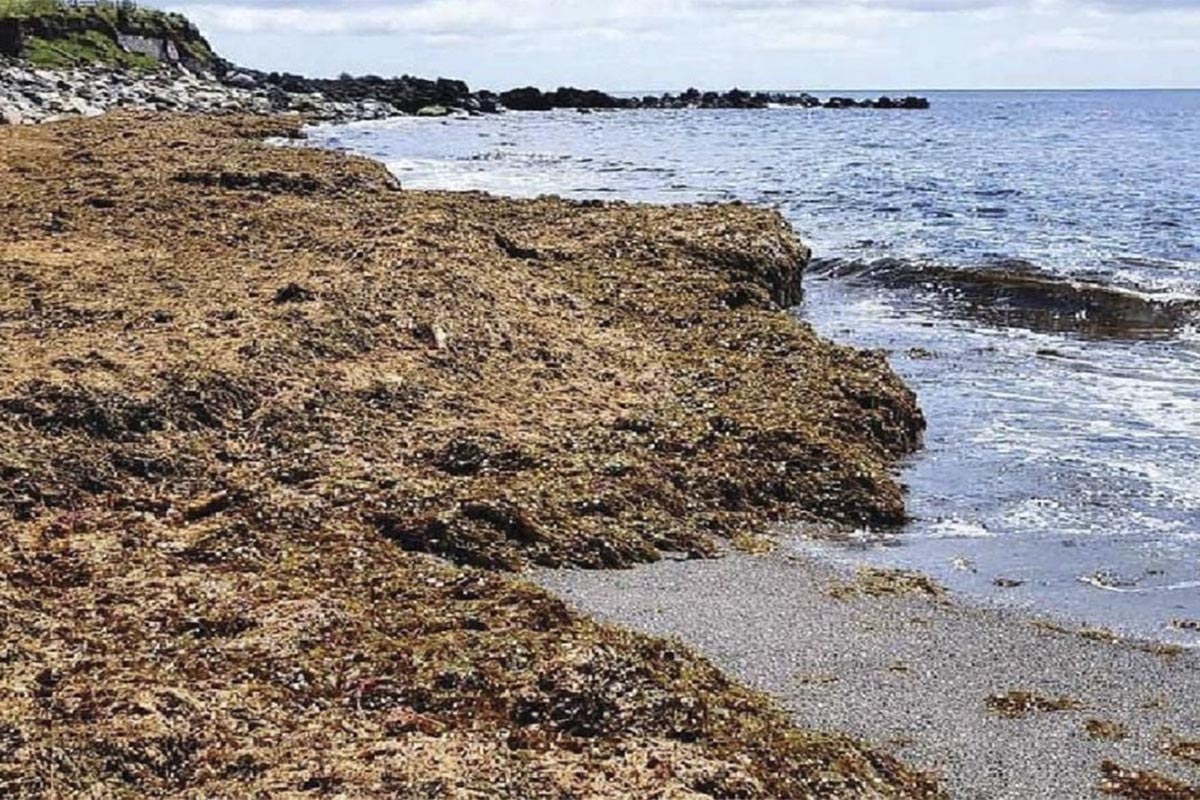
In Portugal, areas such as the Algarve and Cascais are among the regions affected by this phenomenon, which causes large accumulations of seaweed to wash up on beaches, coves, and natural areas of immense environmental and tourism value.
Removing these accumulations entails a significant financial and logistical effort for local authorities. Furthermore, the decomposition of the algae generates foul odors, harms the image of tourist destinations, and can disrupt the balance of coastal ecosystems.
Faced with this situation, various Portuguese institutions are showing interest in new technological solutions that would enable preventive action and reduce the massive influx of algae onto their beaches.
The Cascais City Council contacts Nautilus Dragados Marítimos directly.
Against this backdrop, Nautilus Dragados Marítimos has received official communication from a representative of the Cascais City Council (Câmara Municipal de Cascais), who is interested in learning about the solutions the Spanish company is developing for the containment and collection of invasive algae.
This institutional contact represents a significant step forward in Nautilus’s international profile, as its technological development is attracting interest beyond Spain’s borders.
The company is also in talks with other bodies and institutions in Portugal, at a time when the search for effective solutions to deal with invasive algae has become a priority for numerous coastal municipalities.
A pioneering system that seeks to prevent algae from reaching the beaches.
The main innovation developed by Nautilus Dragados Marítimos consists of a specialized system of anti-algae barriers, designed to intercept accumulations of Rugulopteryx okamurae before they reach the coast.
In contrast to traditional methods, which focus primarily on removing algae once they have washed up on the sand, Nautilus proposes taking action directly within the marine environment.
Their philosophy is clear: prevent seaweed from reaching the beaches, rather than simply collecting it after the damage has already been done.
According to the company, the system constitutes a unique technological solution, developed specifically to address the characteristics of this invasive species and facilitate its containment in the marine environment.
The use of these barriers would make it possible to establish interception and controlled accumulation zones, where removal operations could subsequently be carried out.
The goal is to protect the beaches and reduce the environmental, tourism, and economic impact associated with the massive influx of seaweed.
Specialized amphibious dredgers: collecting seaweed directly from the sea
Nautilus’s second major innovation lies in its specialized amphibious dredgers, which enable operations in shallow waters and areas that are difficult for conventional vessels and machinery to access.
This equipment constitutes a fundamental part of the comprehensive system developed by the company.
The combination of anti-algae barriers and amphibious dredgers is designed to enable not only the interception of algae accumulations but also their collection directly at sea, before they end up washing up on the beaches.
This operational capability represents an alternative to standard shoreline cleanup procedures, which often require the large-scale deployment of land-based machinery, transport, and personnel.
The model proposed by Nautilus seeks to reduce such interventions, improve operational efficiency, and minimize the inconvenience caused to residents, visitors, and economic activities by algae accumulations.
Furthermore, the system can be studied and adapted to the specific characteristics of each area, taking into account maritime conditions, the configuration of the coastline, and environmental protection needs.
The Algarve and Cascais: strategic territories for a possible intervention.
Portugal’s interest in Nautilus’s solutions is particularly significant in regions such as the Algarve, one of Europe’s most important tourist destinations.
Its beaches and coastal landscapes are a key economic driver for the south of the country; consequently, the massive presence of invasive algae poses a threat to its tourism appeal and to marine-related activities.
The situation is also a cause for concern in Cascais, a municipality located in the Lisbon metropolitan area and internationally renowned for its natural heritage, beaches, and historical ties to the Atlantic Ocean.
Nautilus strengthens its international reach and its commitment to the blue economy.
The interest shown by Portuguese institutions represents a new boost for Nautilus Dragados Marítimos, a Spanish company committed to technological innovation applied to maritime operations and environmental protection.
From Málaga, the company continues to develop solutions that combine engineering, amphibious technology, and new intervention strategies for aquatic environments.
The fight against the spread of Rugulopteryx okamurae represents one of the areas where Nautilus aims to provide distinctive solutions, particularly in territories where the presence of this species is causing significant environmental and economic problems.
The company considers cooperation among institutions, public administrations, and technology companies essential to addressing a problem that affects numerous points along the Iberian coastline and requires coordinated responses.
Contact with Cascais City Council and discussions with other Portuguese bodies confirm the growing interest in the potential of Nautilus solutions and their possible application in new international scenarios.
A new way to protect our coasts
The issue of Asian algae demonstrates the need to move towards more preventive, efficient, and sustainable coastal management models.
Against this backdrop, Nautilus Dragados Marítimos proposes an innovation-based approach: combining offshore containment systems with specialized amphibious equipment capable of intervening before the algae reach the beaches.
A proposal that seeks to contribute to the protection of the coastline, reduce the impact of biological invasions, and offer new tools to the authorities responsible for coastal conservation.
Portugal represents a new opportunity to demonstrate the potential of this Spanish technology and advance towards international cooperation aimed at protecting our seas.
NAUTILUS DRAGADOS MARÍTIMOS
Innovation, amphibious technology, and solutions for marine environmental protection.