
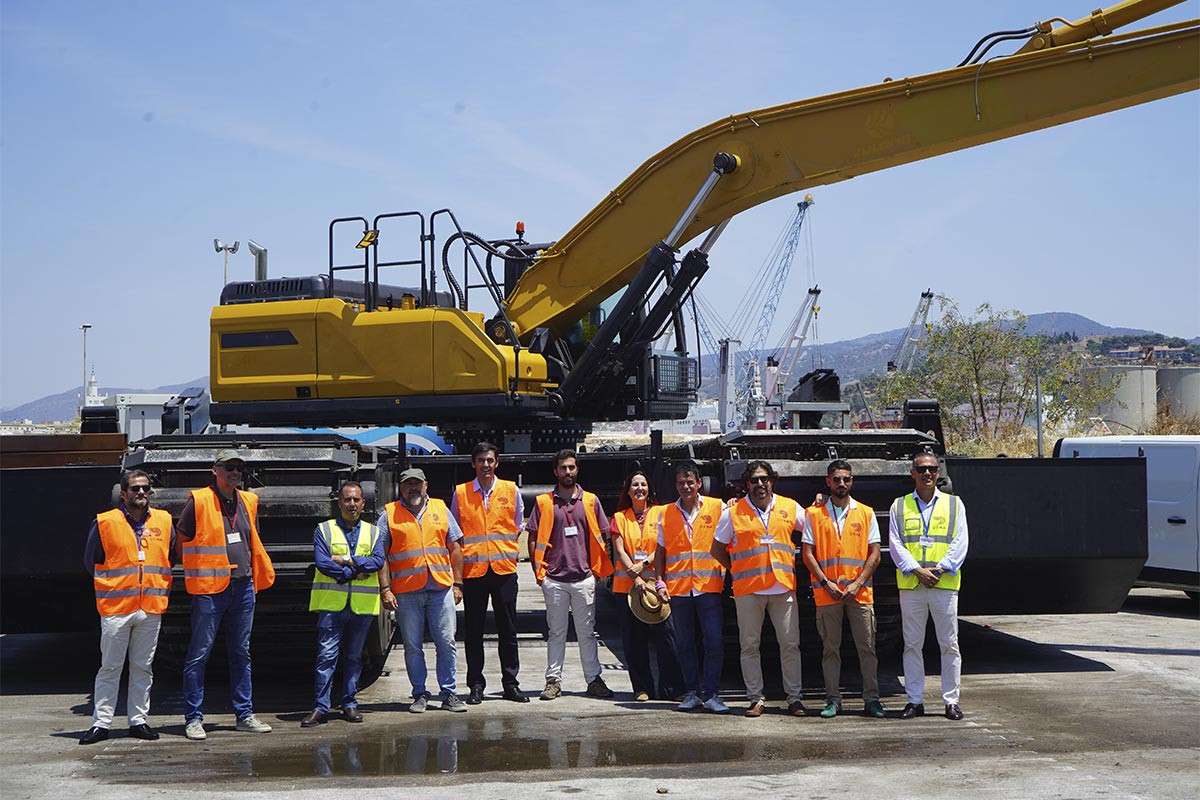
The Guadiana River Basin Authority, EULEN, ATENEA INGENIERÍA, EXVER, GRUPO ROVER and hydraulic engineering specialists visit the Nautilus Dragados operational base in the Port of Malaga to learn about a unique technology developed to restore highly complex aquatic ecosystems.
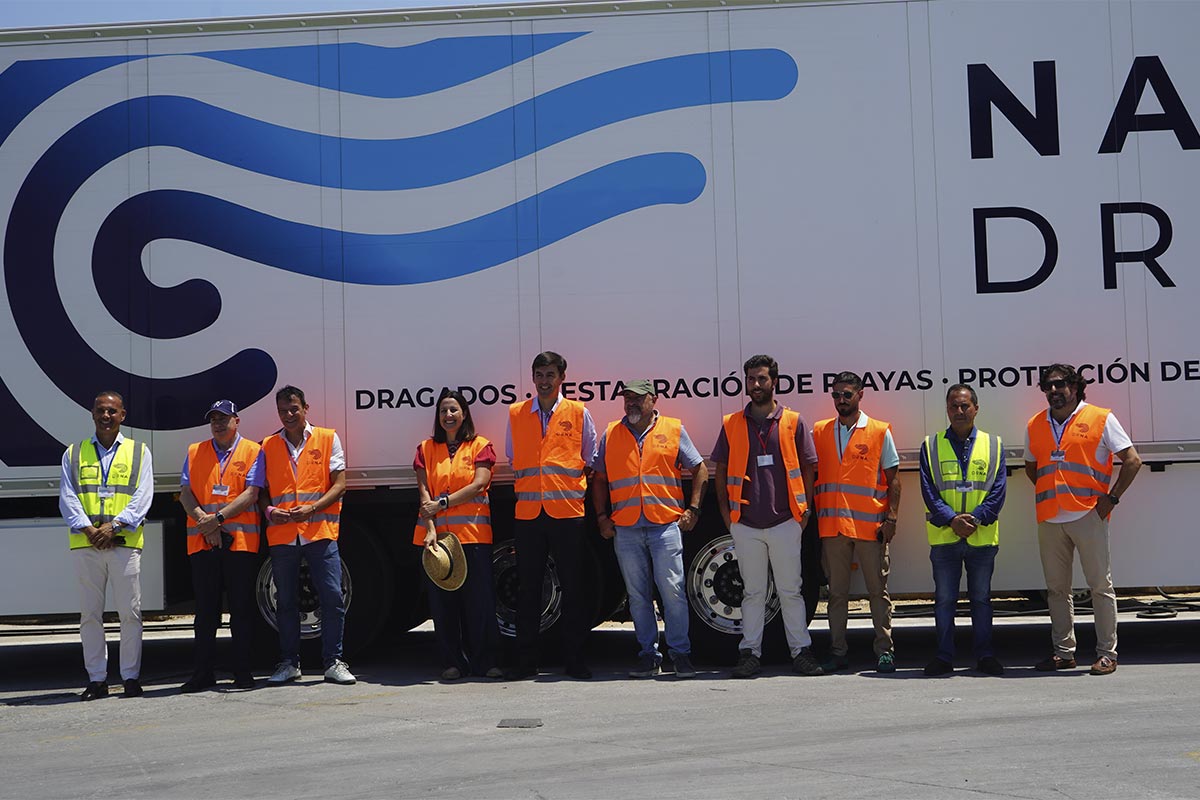
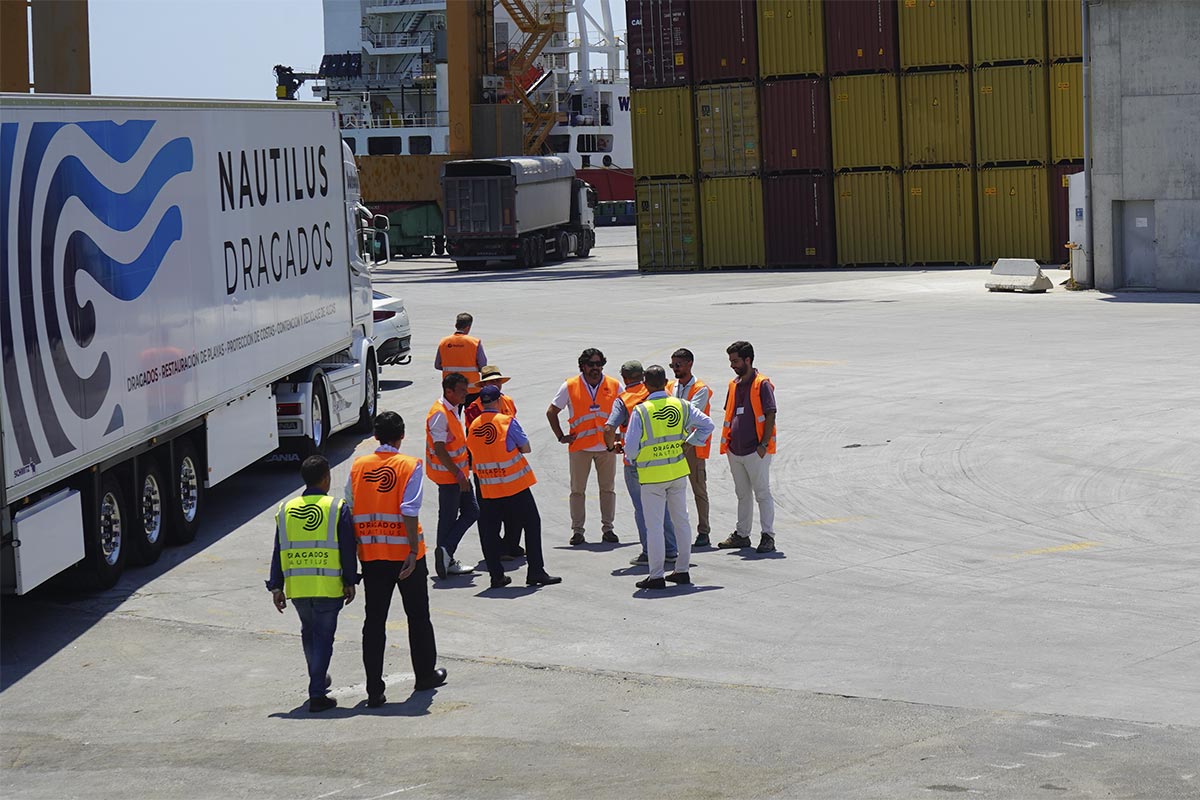
That was precisely the objective of the technical visit held at the operational facilities of Nautilus Dragados, located at the Noatum Maritime terminal, in the Port of Malaga.
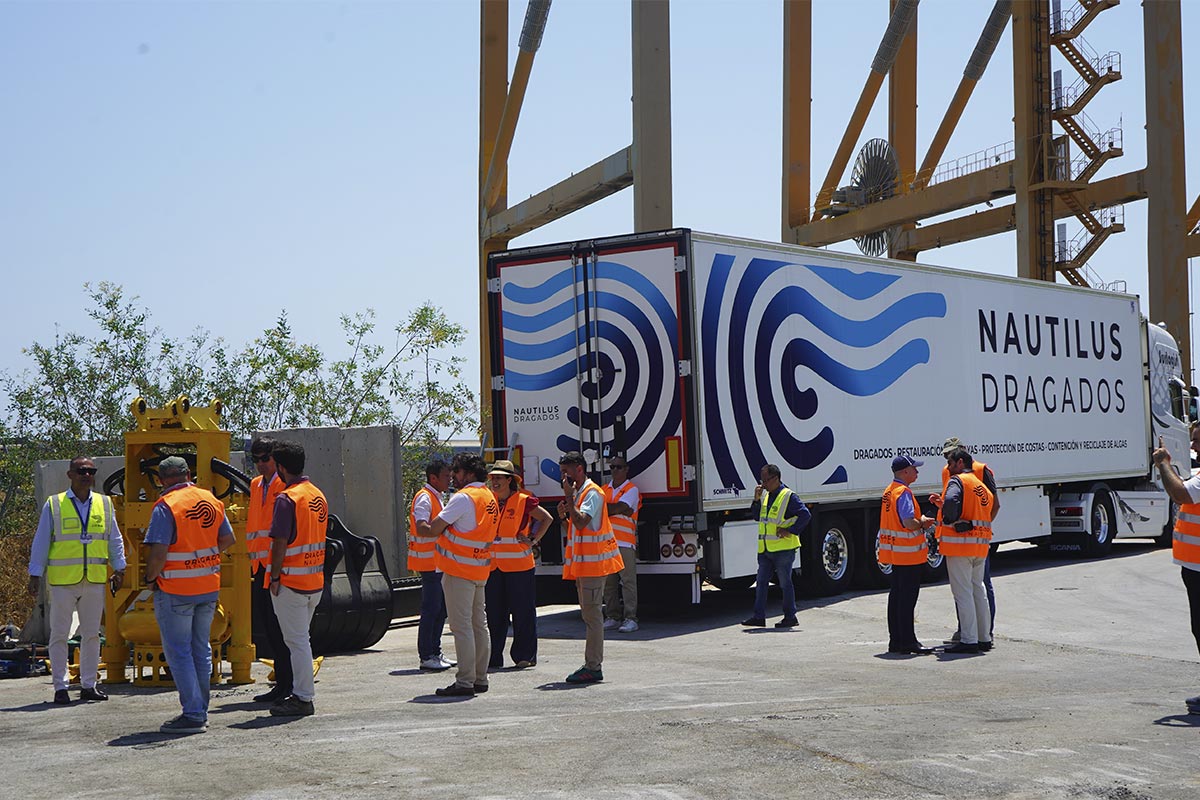
During a full day of work, a prominent delegation from the Guadiana River Basin Authority, along with national managers from EULEN Environment, representatives from GRUPO ROVER, EXVER, and technicians and specialists in hydraulic engineering, traveled to Malaga to learn firsthand about the technological system developed by Nautilus Dragados and to analyze its capabilities to intervene in one of the most complex environmental restoration projects currently underway in Spain.
More than a demonstration of machinery, the day was a high-level technical meeting in which real solutions were analyzed to address an environmental problem of enormous complexity that affects the Guadiana River.
An environmental challenge that demands new solutions
The Guadiana River Basin Authority is currently promoting a major project aimed at restoring the hydraulic functionality of different sections of the river by removing accumulated sludge and controlling the Mexican water lily, an invasive species that has colonized large areas of the riverbed, altering the ecological balance, hindering the natural flow of water and compromising the conservation of the ecosystem.
The combination of extremely soft sediments, shallow depth, high density of aquatic vegetation and the need to preserve a particularly sensitive environment makes this project one where the selection of the appropriate technology is crucial to ensuring the success of the work.
With this objective, the project’s technical managers considered it essential to personally understand the solution developed by Nautilus Dragados, analyzing not only the machinery, but also the comprehensive intervention system designed by the company after years of research, development and applied engineering.
A working day among specialists
The visit began with a technical meeting held at Noatum’s facilities, where aspects related to the planning of actions, amphibious mobility, precision hydraulic dredging, long-distance pumping systems, management of extracted material, minimization of environmental impact and the possibilities of applying this technology in actions developed on rivers, reservoirs, wetlands, lagoons and other aquatic ecosystems were analyzed.
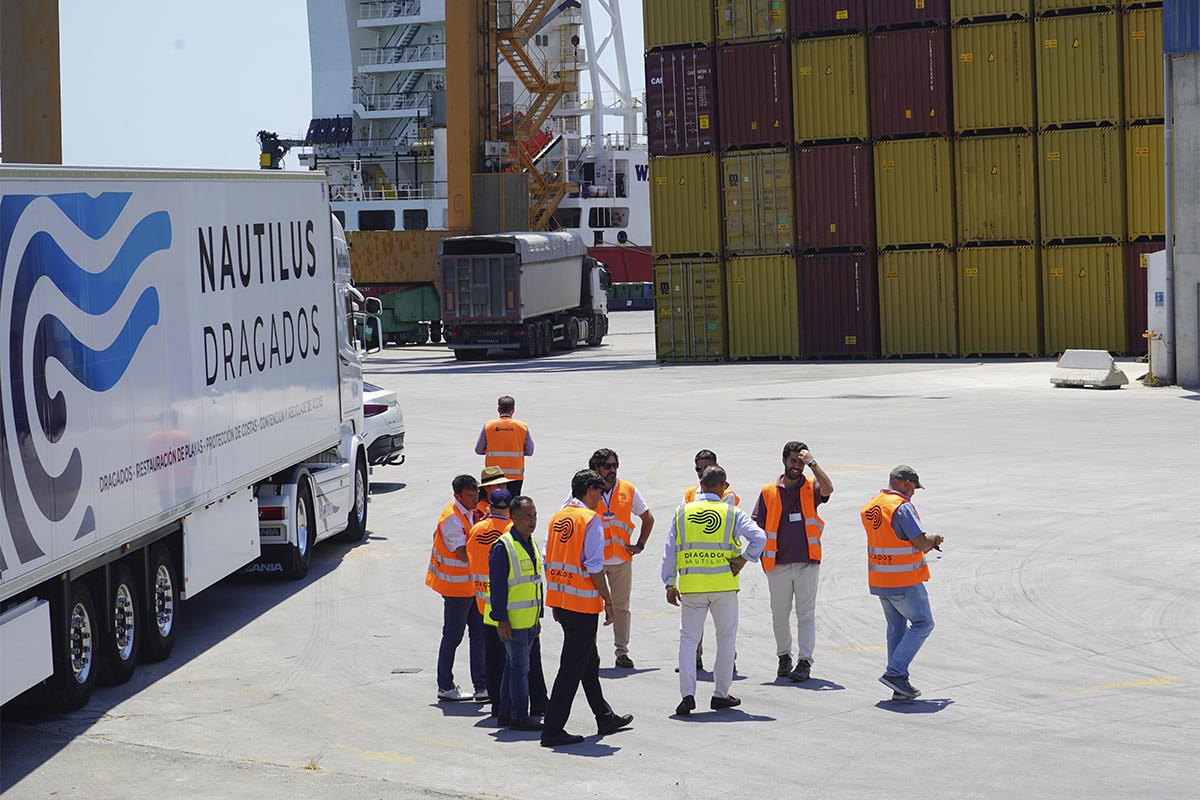
Far from being a commercial presentation, the day unfolded under an eminently technical approach, where each of the system’s capabilities was analyzed from the perspective of its practical application on the ground.
A technology developed over more than five years
The most anticipated moment of the day arrived with the visit to the main protagonist of the meeting.
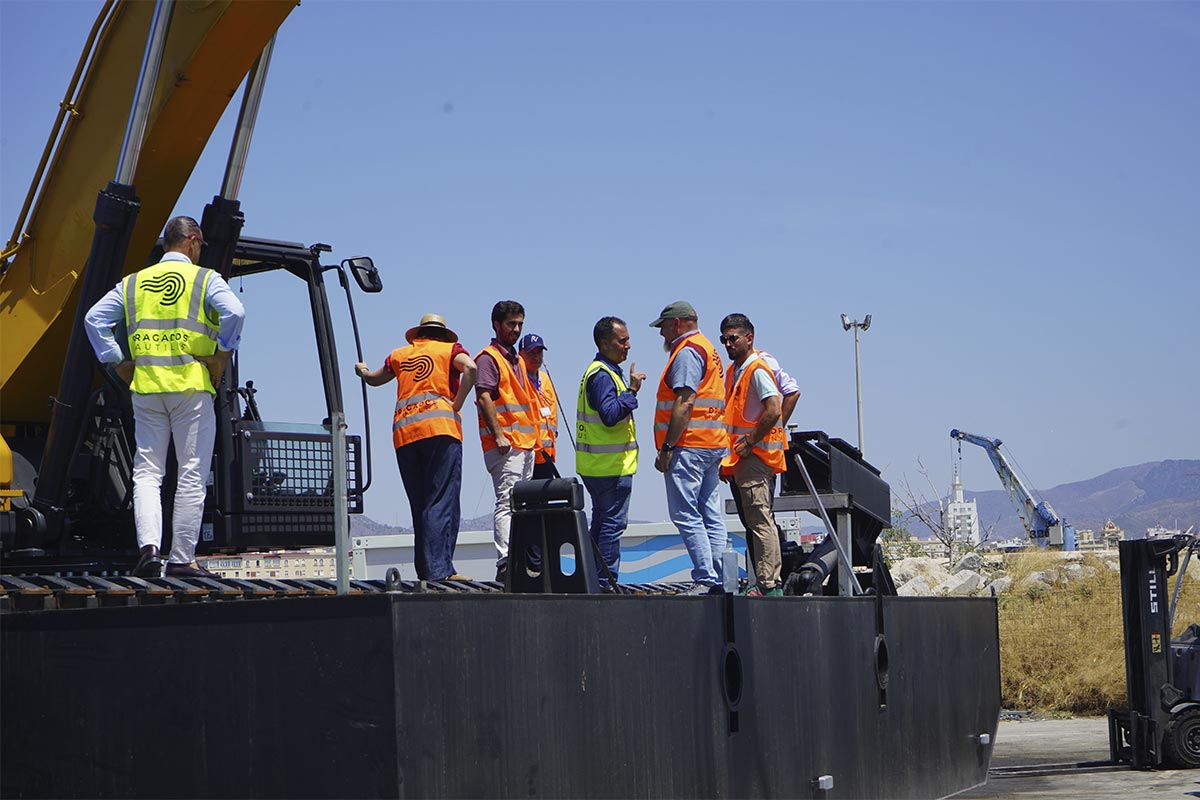
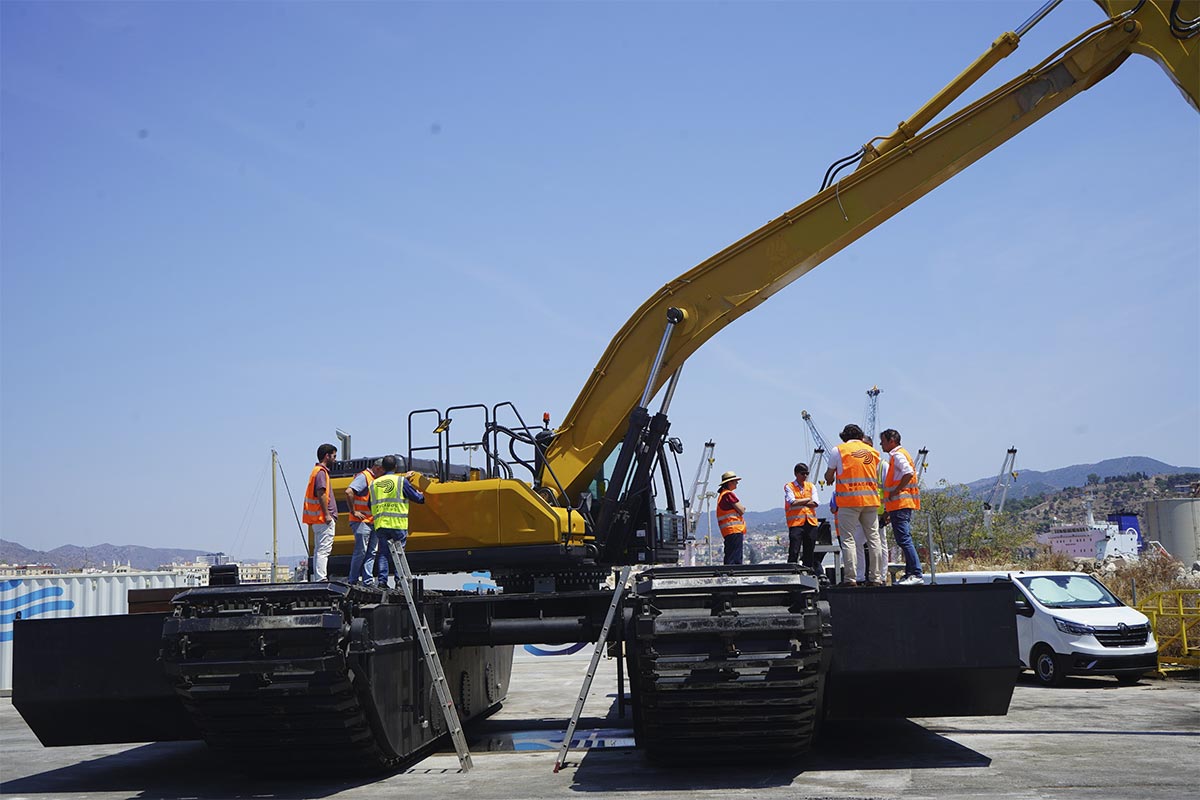
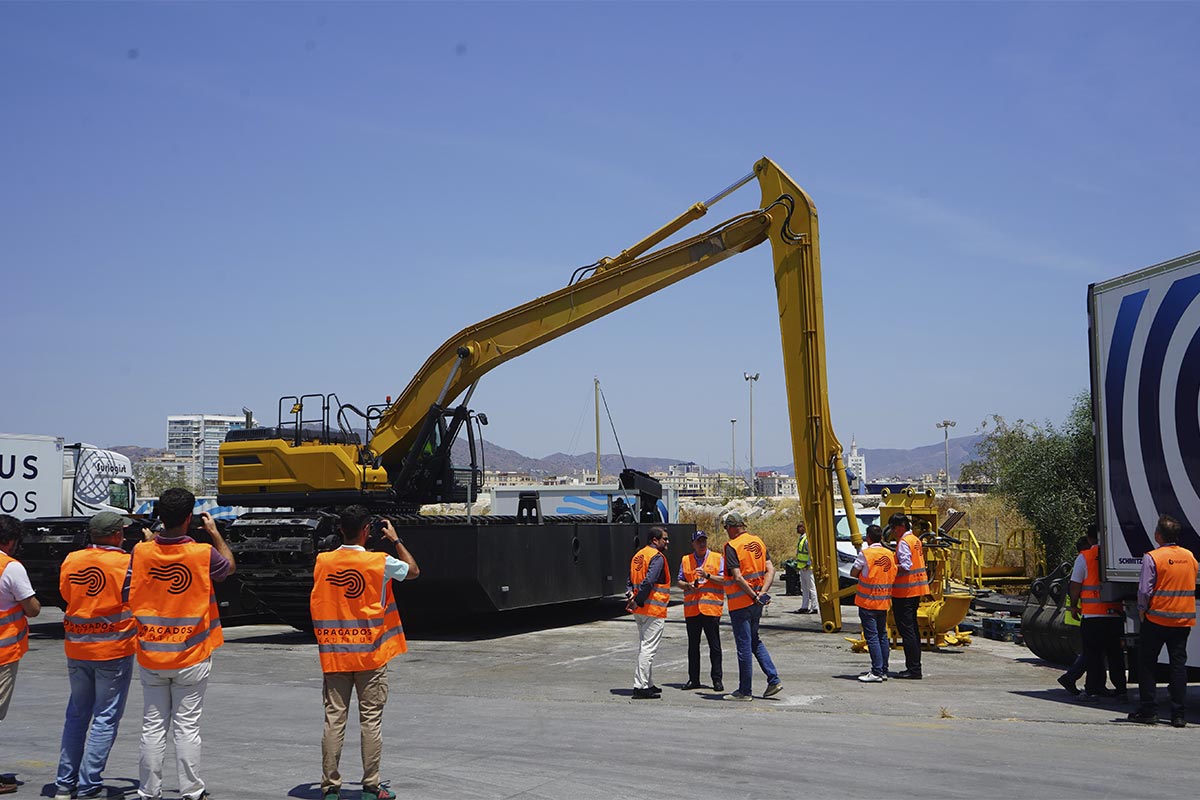
The amphibious dredger developed exclusively by Nautilus Dragados.
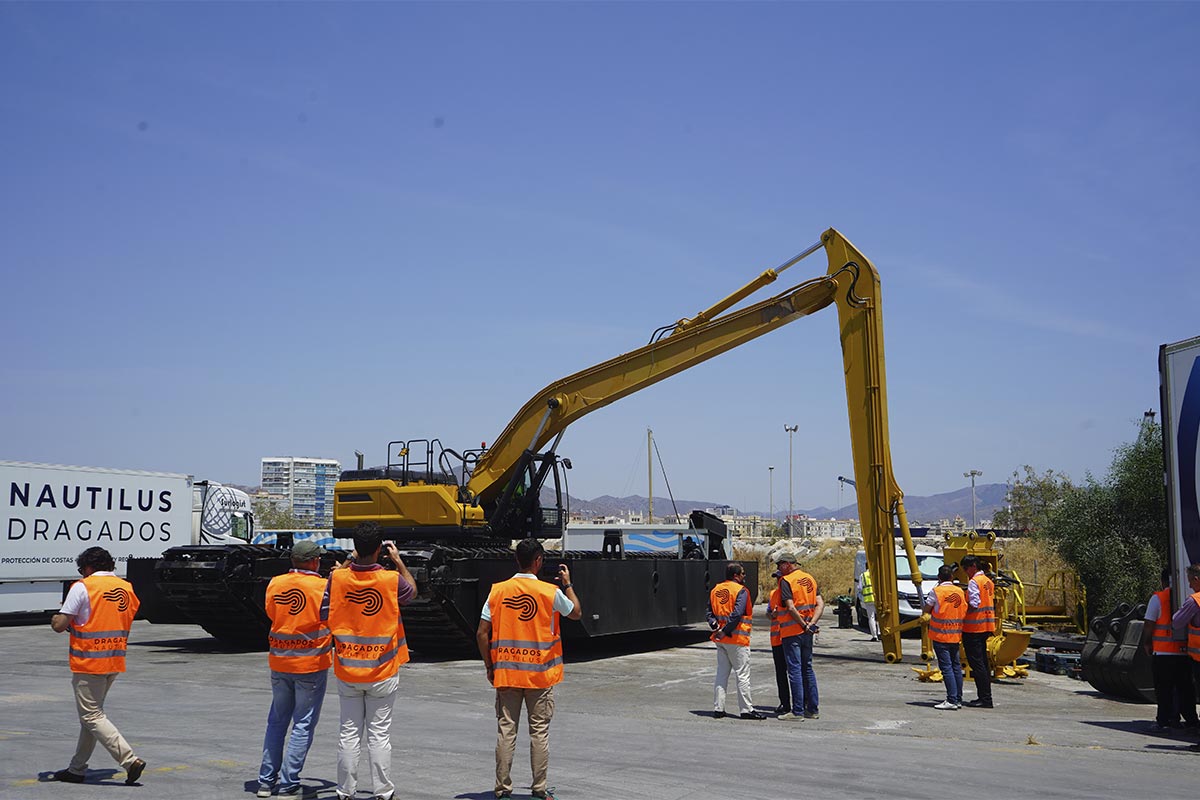
Each of its components has been specifically designed to handle actions of high hydraulic and environmental complexity.
Its design, configuration and dimensions respond to technical specifications defined by the company itself, making it a unique platform and the central axis of the Nautilus System.
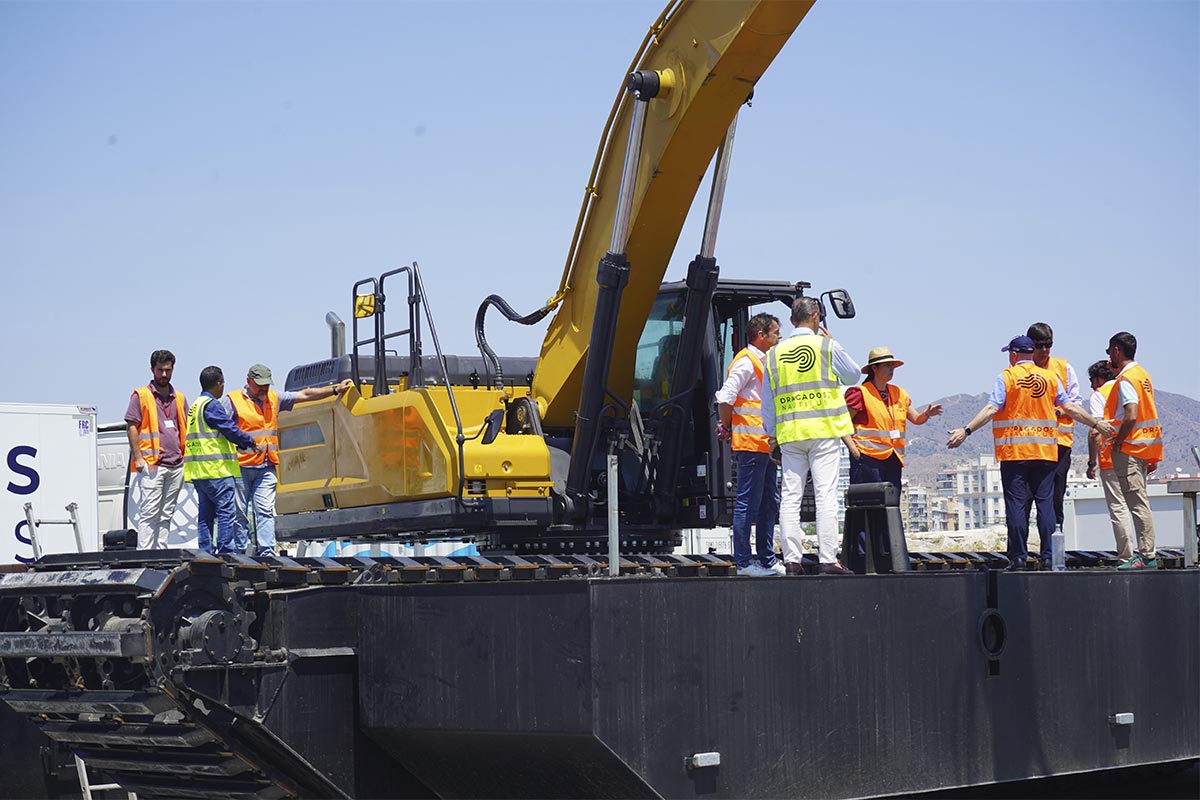
The machine represents a completely different concept from conventional dredgers. Its amphibious capability allows it to move freely on land and water, access areas where other equipment encounters significant limitations, and perform precision operations while minimizing the need for auxiliary infrastructure and significantly reducing its environmental impact.
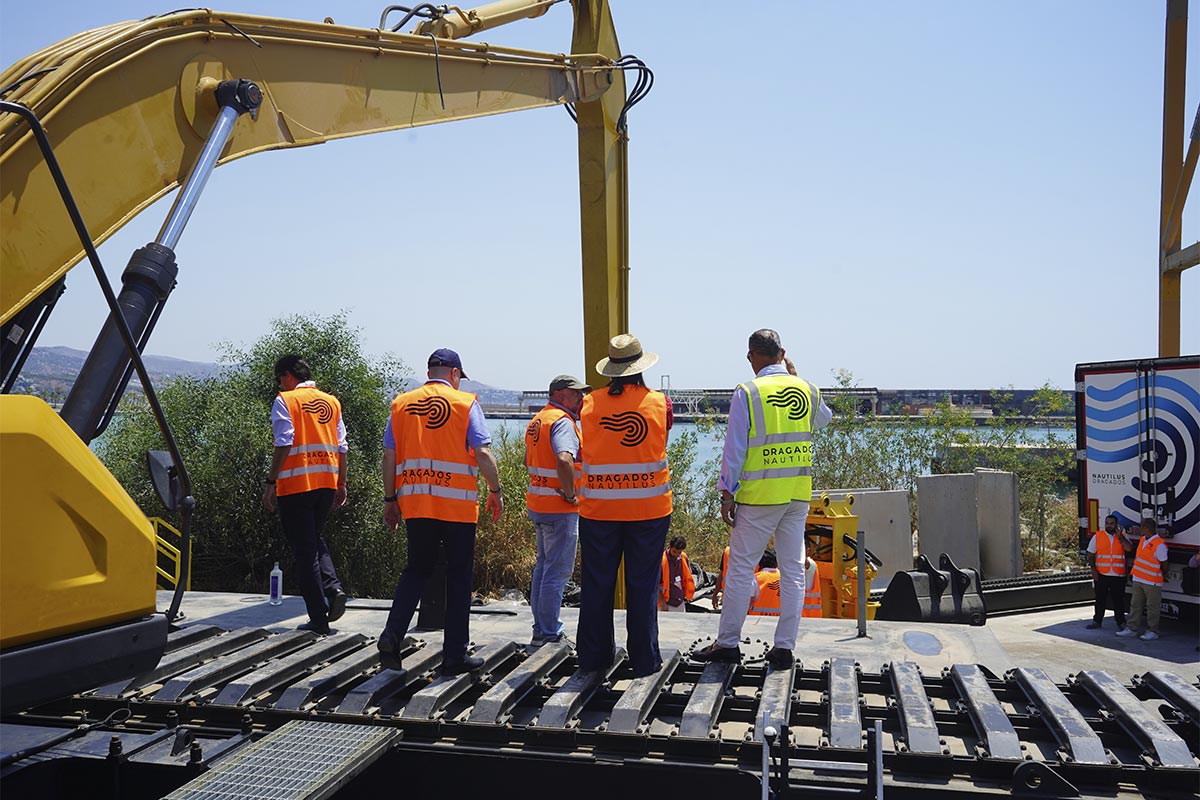
During the visit, attendees toured the machine in detail, accessed its different systems, and were able to learn firsthand about the technical solutions incorporated in a development specifically designed to intervene where the complexity of the environment demands highly specialized tools.
Much more than a dredger
One of the main messages conveyed during the day was that the true value of Nautilus Dragados does not reside solely in a machine.
The dredger is the centerpiece of a much broader technological ecosystem. It’s an integrated system that combines engineering, planning, amphibious technology, hydraulic dredging, long-distance pumping, sediment management solutions, environmental methodologies, and work procedures developed to intervene precisely in particularly sensitive ecosystems.
This integration allows each action to be adapted to the specific characteristics of the project, optimizing productivity, reducing the environmental footprint and offering enormous operational flexibility.
Innovation isn’t just about having a different machine. It’s about developing a new way to solve problems that previously had significant technical limitations.
Engineering developed from Andalusia
From its inception, Nautilus Dragados has been committed to a model based on applied innovation, developing its own solutions aimed at solving real problems through specialized engineering and state-of-the-art technology.
For more than five years, the company has invested human, technological and economic resources in the development of a system capable of responding to scenarios where mobility, precision and sustainability are crucial.
This effort is now beginning to consolidate itself as a reference for future actions related to environmental restoration and sustainable water management.
Francisco Manen: “Innovation only makes sense when it solves real problems”
During the event, Francisco Manen, CEO and founder of Nautilus Dragados, wanted to focus on the true objective that has inspired the development of this technology.
“More than five years ago, we asked ourselves a very simple question: what happens when an environmental problem cannot be effectively solved with existing tools? The answer was to dedicate years of work to developing a completely new technology. Our goal was never to build a different machine. Our goal was to develop a solution capable of helping public administrations and large companies address some of the biggest challenges related to water management and the restoration of our aquatic ecosystems.”
Manen also highlighted that the future of hydraulic engineering lies in integrating innovation, sustainability, and specialization.
A day that looks to the future
The visit concluded with a complete tour of the machinery and an institutional photograph of all participants in front of the large amphibious dredger, a symbol of Nautilus Dragados’ commitment to innovation and environmental restoration.
Beyond the Guadiana River project, the event highlighted the enormous potential of this technology for future projects throughout the country.
The challenges related to water resource conservation will continue to grow. And with them will also grow the need to incorporate new tools capable of responding to increasingly demanding scenarios from a technical and environmental perspective.
Attendees at the technical session
The visit included the participation of representatives from the main entities involved in the project and in the management of the public water domain:
Guadiana River Basin Authority
- Nicolás Cifuentes y de la Cerra, Deputy Commissioner of Water.
- Francisco Sánchez Piñero, Technician.
EULEN Environment
- Juan Carlos Moya García, National Director.
- Antonio Luis Herrero Carmona, Director of the Extremadura Region.
- Isabel Guerrero González, Technical Project Manager.
Atenea Ingeniería
- Francisco Mauricio Ariza Perezagua, Technician.
ROVER
- Julio Lacruz Santa Cruz, Department Head.
- Pablo Villar Martín, Construction Director.
EXVER
- Antonio Jesús Corbacho Rodríguez.
- José Luis Prieto Recio.
Nautilus Dragados
- Francisco Manen, CEO and Founder.
- Toni Fernández, Director of Logistics and Institutional Relations.
- Álvaro Manén, Head of Communications
Gratitude
Nautilus Dragados wishes to express its sincere gratitude to Noatum Maritime and its entire team at the Port of Malaga terminal for their support, collaboration, and the facilities provided for the organization of this technical conference.
The possibility of holding this meeting at the Nautilus Dragados operational base, located at the Noatum Maritime terminal, made it possible to showcase, under real working conditions, a technology designed to respond to some of the biggest environmental challenges related to water management.
Nautilus Dragados also appreciates the presence and interest shown by all attendees, convinced that the exchange of knowledge and collaboration between Public Administrations, specialized companies and engineering firms constitute the way to continue promoting innovative solutions at the service of the environment and society.